
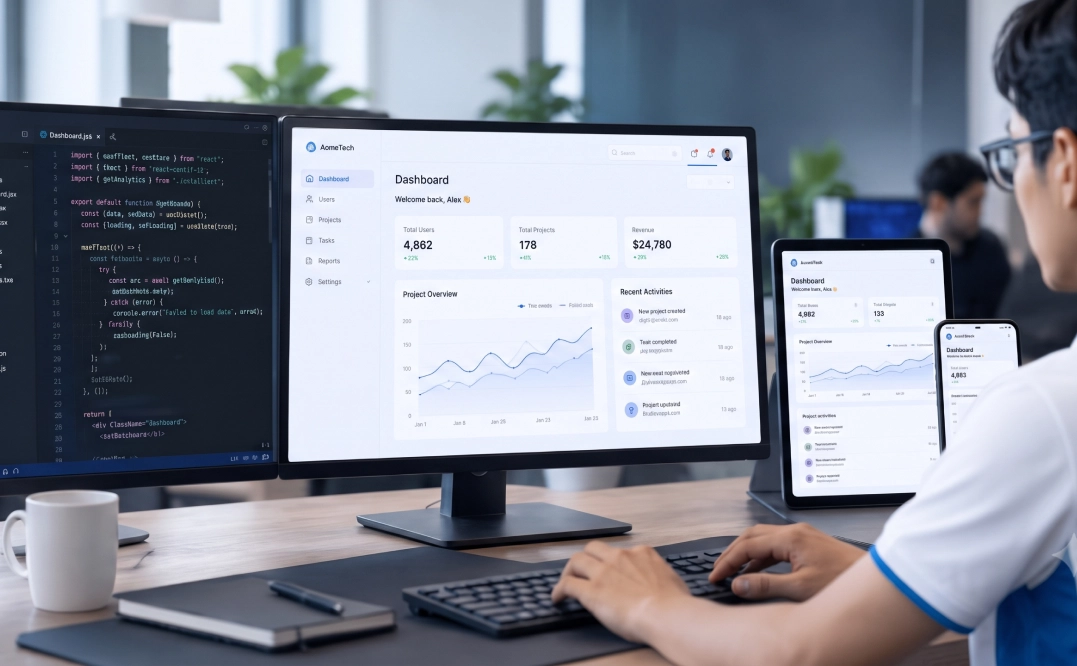
Component-Based Development
Build reusable React components and shared UI patterns for consistent interfaces.
Build responsive, interactive web applications with React. Bado Tech helps businesses develop SaaS platforms, customer portals, and enterprise interfaces with maintainable frontend architecture and seamless backend integration.
We build web interfaces around your product requirements, user workflows, and business goals.
Build interactive SaaS products with reusable components, user management, dashboards, and business workflows.
Develop internal tools, customer portals, and business applications tailored to operational requirements.
Create product discovery, shopping, account, and checkout experiences connected to commerce backends.
Improve existing web interfaces, reorganize frontend components, and modernize user experiences.
We combine frontend engineering practices with suitable tools and architecture to create web applications that are easier to maintain and extend.
Build reusable React components and shared UI patterns for consistent interfaces.
Structure application logic with suitable typing and clear component responsibilities.
Use Tailwind CSS and reusable styling patterns to build consistent, responsive interfaces.
Connect frontend applications with REST APIs, authentication services, and backend systems.
Organize application state, asynchronous data, and user interactions according to product complexity.
Review rendering, asset loading, and data fetching to identify performance bottlenecks.
We turn product requirements into functional web applications through a structured development process.
Define user journeys, screen requirements, and application needs.
Plan components, data flow, styling, and API integration.
Build responsive interfaces and validate functionality across relevant browsers and devices.
Prepare releases and refine the application based on testing and product feedback.
We focus on frontend quality, usability, and maintainable implementation throughout product development.

Create interfaces that adapt to different screen sizes and usage contexts.
Identify unnecessary rendering and loading overhead to improve application responsiveness.
Organize components and UI patterns to support consistent design and future development.
Connect frontend experiences with backend services and existing business systems.