

Hiring skilled software developers is an important decision for businesses looking to build digital products, modernize existing systems, or expand their engineering capacity. Vietnam has become an attractive destination for international companies seeking technical talent and flexible software development partnerships.
Choosing the right developers involves more than comparing hourly rates or reviewing technical resumes. Businesses need to evaluate technical expertise, communication, project requirements, and the right hiring approach before making a decision.
Overview of IT Outsourcing Services in Vietnam
Vietnam has developed a growing technology ecosystem that supports software development, IT services, and digital transformation for businesses in domestic and international markets. Its technology sector includes software development companies, IT service providers, and engineering teams serving clients across multiple industries.
According to Vietnam's Ministry of Information and Communications, the country had 73,788 digital technology enterprises and nearly 1.26 million ICT workers by the end of 2024. The ministry also reported that 1,900 Vietnamese digital technology enterprises generated revenue from foreign markets, with total overseas revenue reaching US$11.5 billion in 2024.
These figures cover the broader digital technology industry rather than IT outsourcing alone. Nevertheless, they demonstrate the scale of Vietnam's technology ecosystem and its participation in international markets.
The IT services market also offers useful context for businesses considering external development resources. KPMG's Vietnam 2024 Outlook estimated that Vietnam's IT services market would generate US$2.07 billion in 2024 and projected a compound annual growth rate (CAGR) of 11.51% from 2024 to 2028. These figures were published as market estimates and forecasts in 2024, not confirmed actual results for 2026.
For international businesses, Vietnam provides several ways to access engineering talent, from hiring individual developers to working with an external team on a long-term product roadmap. The appropriate approach depends on the required skills, project scope, budget, and level of control the business wants to retain.
Why Hire Developers in Vietnam?
Businesses choose Vietnam for several reasons, including access to technology talent, flexible team structures, and opportunities to manage development costs. However, the benefits depend on the project's requirements and the quality of the developers or service provider selected.
Access to a Growing Technology Workforce
Vietnam has a developing ecosystem of software engineers, technology companies, and technical education institutions. Businesses can explore candidates with different levels of experience, from developers who build web applications to engineers specializing in cloud infrastructure, mobile development, and AI solutions.
This range of talent can help companies find professionals suited to different stages of product development. For example, an early-stage business may need a small team to validate an idea, while an established company may require additional engineers to modernize its existing systems.
Rather than focusing only on the number of available candidates, businesses should assess relevant experience, technical depth, and the ability to contribute to their specific product goals.
Flexible Hiring and Team Expansion
Building an internal engineering department can take time, particularly when a company needs several specialized roles at once. Working with an external development partner can provide another way to access talent without managing every part of recruitment independently.
Depending on the project, businesses may hire individual developers, add external engineers to an existing team, or engage a provider to deliver a defined software project.
These options allow companies to adjust their engineering capacity according to business priorities. The right arrangement depends on how much direct control the internal team needs and who will be responsible for planning, execution, and delivery.

Opportunities to Manage Development Costs
Development costs are another reason international businesses consider Vietnam. Developer salaries and service fees may differ from those in North America, Western Europe, Australia, and other markets.
However, a lower hourly rate does not automatically translate into a lower total project cost. Businesses should also account for recruitment, onboarding, project management, communication, quality assurance, infrastructure, and ongoing maintenance.
A more reliable comparison evaluates the total cost of ownership alongside delivery quality, productivity, and the long-term value of the software being developed.
Access to Specialized Technology Expertise
Modern software projects often require more than general programming skills. Businesses may need engineers who understand specific frameworks, cloud platforms, system architectures, integrations, or AI technologies.
Vietnam's technology ecosystem includes professionals across multiple engineering disciplines. The challenge is identifying candidates whose experience matches the product's technical requirements.
Before hiring, define the required technology stack, expected responsibilities, and level of seniority. You can explore Bado Tech's technology expertise to identify relevant technologies and engineering capabilities for your software development needs.
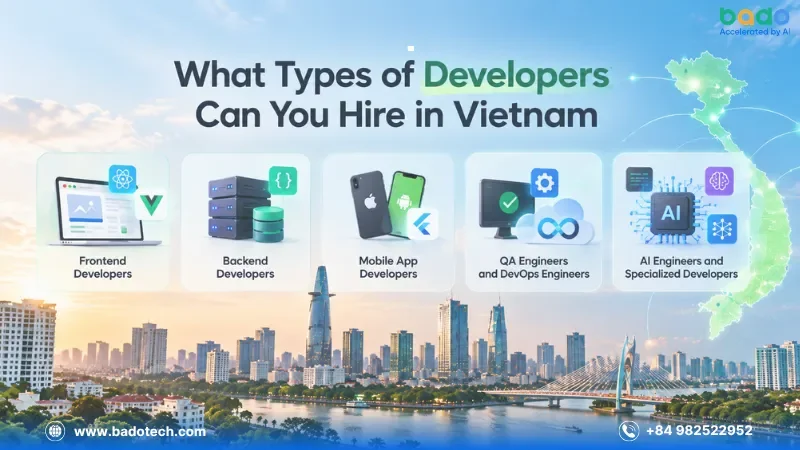
What Types of Developers Can You Hire in Vietnam?
The developers you need depend on your product, technical architecture, development stage, and internal team's capabilities. Defining these requirements before recruitment helps reduce mismatches and makes technical interviews more effective.
Frontend Developers
Frontend developers build the interfaces that users interact with in web applications. They work with technologies such as JavaScript, React, and other frontend frameworks to create responsive, accessible, and maintainable user experiences.
Businesses may hire frontend developers when launching a new web product, improving an existing interface, or building customer-facing platforms. Candidates should be assessed on their practical experience, understanding of frontend architecture, and ability to work effectively with designers and backend engineers.
Backend Developers
Backend developers handle application logic, APIs, databases, authentication, and server-side processes. Their work supports the performance, security, and reliability of software products.
For SaaS platforms, enterprise applications, and data-intensive systems, businesses should evaluate candidates based on API development, database design, system architecture, and experience with the relevant programming languages and frameworks.
Mobile App Developers
Mobile developers build applications for iOS, Android, or both platforms. Depending on project requirements, businesses may choose native developers or engineers who work with cross-platform frameworks such as Flutter.
The decision should reflect the product's performance requirements, target devices, user experience goals, and long-term maintenance needs.
QA Engineers and DevOps Engineers
QA engineers help identify defects, validate requirements, and improve software reliability through manual and automated testing. DevOps engineers support deployment pipelines, cloud infrastructure, monitoring, and development operations.
These roles are valuable for businesses that need predictable releases, reliable production environments, and stronger quality controls as their products grow.
AI Engineers and Specialized Developers
Businesses developing AI-powered features, data-driven products, or intelligent automation may need engineers with experience in machine learning, AI integration, data engineering, or related disciplines.
Specialized roles require careful evaluation. Candidates should demonstrate relevant project experience and an understanding of the limitations, security considerations, and operational requirements of the technologies they use.
How to Hire Software Developers in Vietnam?
Understanding how to hire software developers starts with defining your project requirements, identifying the necessary technical skills, and choosing the right hiring approach. A clear scope helps you evaluate candidates, estimate resources, and set realistic expectations.
Next, assess developers based on their technical expertise, previous projects, problem-solving abilities, and communication skills. For remote teams, establish clear expectations for collaboration, reporting, and time zone alignment.
You should also clarify the budget, project scope, responsibilities, intellectual property ownership, and security requirements before development begins. A structured onboarding process with clear deliverables and documentation helps developers integrate into your team more efficiently.
If you need external engineering support, explore Bado Tech's developer hiring options. You should also consider different software outsourcing models, such as dedicated development teams, staff augmentation, and project-based outsourcing.
>> View more: Software Outsourcing Models: How to Choose the Right One for Your Business
What to Consider When Hiring Developers in Vietnam
Hiring internationally introduces considerations beyond technical screening. Addressing them early helps prevent avoidable delays and makes collaboration more predictable.
Technical Fit and Architecture
Evaluate whether developers have experience with your existing stack, system architecture, and engineering standards. If your project requires specific frameworks or cloud services, confirm that candidates can demonstrate relevant experience instead of relying on general technology familiarity.
Your assessment should also consider scalability, security, testing, and maintainability. A developer who can deliver a feature quickly but cannot support its long-term operation may create additional costs later.
Communication and Time Zone Alignment
Vietnam's time zone is UTC+7. Businesses in Asia-Pacific may find overlapping working hours easier to arrange, while teams in Europe or North America may need agreed collaboration windows.
Time zone differences do not necessarily prevent effective teamwork. Clear documentation, asynchronous updates, regular planning sessions, and defined response expectations can help distributed teams work efficiently.
Budget and Total Cost of Ownership
Compare the complete cost of each hiring option, not just the advertised salary or service rate. Consider recruitment fees, onboarding time, management overhead, infrastructure, testing, retention, and future maintenance.
A transparent budget should also account for changes in project scope and the possibility that specialist skills may command higher rates than general development roles.
Security, Compliance, and Intellectual Property
Before sharing source code or customer data, establish appropriate confidentiality obligations, access controls, and security procedures. Confirm ownership of deliverables, licensing obligations, data handling requirements, and the process for transferring work when the engagement ends.
Requirements will vary by industry and jurisdiction, so legal and compliance reviews should be completed where necessary.
Retention and Knowledge Transfer
Long-term projects depend on continuity. Ask how the engagement will handle developer turnover, technical documentation, code reviews, and knowledge transfer.
Documented processes and shared ownership of technical knowledge reduce dependence on any single individual and make it easier to maintain the product as the team changes.
Bado Tech provides a starting point for businesses exploring developer hiring options for software projects. Before choosing a partner, clarify the roles you need, the technologies your product uses, the level of delivery responsibility you expect, and how the external team will work with your internal stakeholders.
You can visit the Hire Developers page to explore developer hiring options and identify the next step for your project.
Conclusion
Choosing to hire developers in Vietnam can give businesses access to a growing technology workforce and flexible ways to expand engineering capacity. Technical fit, communication, security, project management, and the right engagement model all influence the success of a development partnership. Start by defining your requirements, identifying the skills you need, and comparing the available hiring approaches. Contact Bado Tech to build your project.
Frequently Asked Questions
1. Why should businesses hire developers in Vietnam?
Vietnam offers access to a growing technology workforce, a range of engineering specializations, and several ways to engage external development talent. The right choice depends on the project's requirements, budget, and collaboration needs.
2. How can I evaluate Vietnamese software developers?
Review relevant project experience, technical skills, problem-solving ability, communication, and collaboration practices. Use practical assessments that reflect the actual work the developer will perform.
3. Can I hire developers in Vietnam for long-term projects?
Yes. Depending on the provider and agreement, businesses can work with developers or dedicated teams over an extended period. Clear responsibilities, documentation, performance expectations, and knowledge transfer help support long-term collaboration.