

Expanding a software team does not always mean recruiting full-time employees. Businesses can bring in individual specialists or work with an external team to support product development. Understanding how these arrangements differ helps companies allocate resources effectively, maintain delivery standards, and plan for future growth.
Staff Augmentation vs Dedicated Team: Two Different Ways to Extend Your Engineering Capacity
Staff augmentation and dedicated teams are common models in software outsourcing, but they serve different operational needs. One extends an existing workforce with individual specialists, while the other provides a coordinated group of professionals for an ongoing project.
The distinction matters because adding more developers does not automatically solve delivery problems. A business must also consider who manages the work, how technical knowledge is shared, and how external resources fit into its development process.
Staff Augmentation: Adding Specialists to an Existing Team
Staff augmentation allows a company to bring in external developers or other technology professionals to fill specific skill gaps. These specialists work alongside internal employees and usually follow the client's existing workflows, technical standards, and reporting structure.
For example, a SaaS company preparing to launch a new feature may have an experienced engineering team but lack frontend development capacity. Bringing in two React developers through staff augmentation allows the company to increase output without restructuring the entire team.
>> View more: What Is IT Staff Augmentation? Benefits, Models, and How to Choose the Right Partner
The client generally retains responsibility for task assignments, code reviews, sprint planning, and day-to-day supervision. The external provider focuses on supplying suitable professionals and managing the contractual or employment arrangements included in the agreement.
This arrangement works particularly well when a company already has established technical leadership and needs additional expertise for a defined period.
Dedicated Team: Building a Coordinated Development Unit
A dedicated development team is an external group of professionals assigned to work on a client's product or project. Depending on the requirements, the team may include software developers, QA engineers, UI/UX designers, business analysts, and technical leads.
Rather than bringing in individuals to fill isolated gaps, the business establishes a group that works toward shared delivery objectives. The team can maintain product knowledge, collaborate across technical disciplines, and support development beyond a single release.
Consider a startup building a SaaS platform from the ground up. Instead of recruiting every role internally, it could engage an outsourcing partner to assemble a team responsible for developing, testing, deploying, and maintaining the product.
Management responsibilities vary by contract. The client may lead the team's daily activities, or the provider may coordinate delivery while the client retains control over product priorities and business decisions.
Staff Augmentation vs Dedicated Team: A Practical Comparison
The table below summarizes the differences that have the greatest impact on daily operations and long-term delivery.
Neither model guarantees better results on its own. Project outcomes depend on technical capability, communication, management quality, and the clarity of responsibilities between the client and provider.
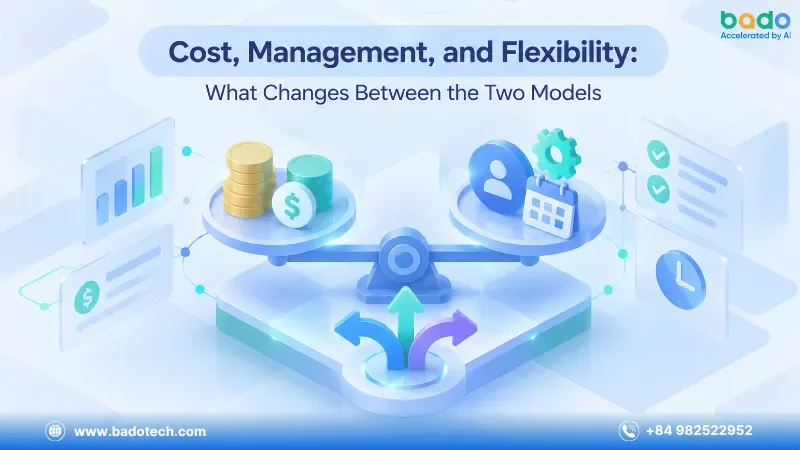
Cost, Management, and Flexibility: What Changes Between the Two Models?
The differences become more significant when a company considers the full cost of delivery, the amount of internal supervision required, and the effort involved in maintaining a stable development process.
Understanding the Total Cost
Staff augmentation is often practical when a business needs a small number of specialists for a specific period. Because the engagement can focus on individual roles, companies can increase capacity without committing to a larger team structure.
However, the quoted developer rate is only part of the expense. Internal management time, onboarding, technical supervision, and communication overhead should also be included when assessing the total cost.
A dedicated team may involve a larger recurring commitment because several professionals work together. In return, the business can access a broader range of capabilities within one engagement, potentially reducing the effort required to coordinate multiple individual contractors.
The financial advantage depends on the project. A company that needs one specialist for a short period may find staff augmentation more economical, while a product requiring continuous work across development and QA may benefit from a dedicated team structure.
Management and Accountability
With staff augmentation, the client usually manages external developers as part of its existing workforce. Internal engineering leaders assign tasks, review code, resolve technical issues, and ensure that development activities follow company standards.
This arrangement offers direct oversight but requires sufficient management capacity. If internal leaders are already overloaded, adding more developers can increase coordination demands instead of improving delivery speed.
A dedicated team can provide a more coordinated working structure. Depending on the engagement, the provider may organize sprints, coordinate technical activities, monitor progress, and manage quality assurance.
The client still needs to define product requirements, set priorities, and approve important decisions. Delegating delivery coordination does not remove the need for clear product ownership or regular communication.
Scaling Resources as Requirements Change
Staff augmentation makes it possible to address specific capacity shortages without changing the broader development structure. A company can add a cloud engineer for an infrastructure migration or bring in QA specialists before a major release.
The dedicated team model is more suitable when development demand remains relatively continuous and requires several complementary roles. As the product grows, the team can expand to include additional developers, testers, or technical specialists.
Both arrangements have practical limitations. Resource availability, replacement lead times, onboarding requirements, and contractual commitments can affect how quickly capacity changes take effect.
For long-term projects, businesses should consider not only how easily a team can grow but also how effectively it retains knowledge of the product architecture, technical decisions, and business requirements.
Managing Delivery Risks and Product Knowledge
External development introduces risks regardless of the engagement model. These may include communication gaps, inconsistent documentation, security issues, resource turnover, or unclear responsibility for defects.
Staff augmentation requires the client to maintain strong internal processes for documentation, access control, code review, and knowledge transfer. If a specialist leaves, another developer may need time to understand the existing codebase.
A dedicated team can distribute knowledge across several team members and establish shared delivery practices. However, this benefit is not automatic: documentation, technical standards, and continuity planning remain essential.
Before signing an agreement, businesses should clarify intellectual property ownership, confidentiality requirements, security controls, replacement procedures, and responsibility for maintaining the software.
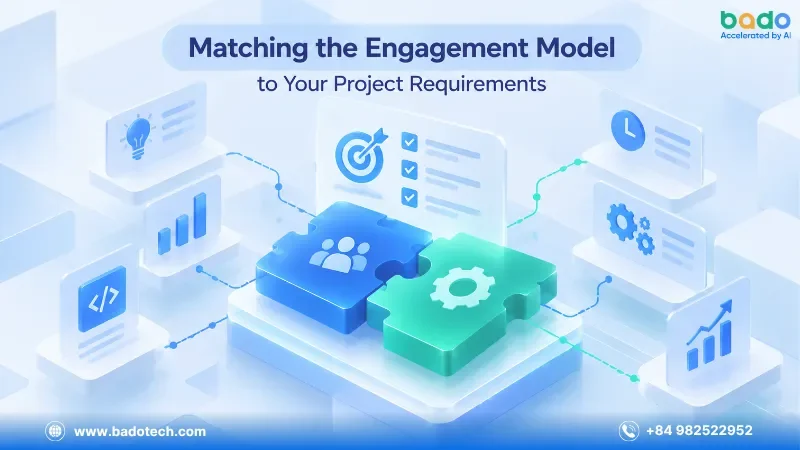
Matching the Engagement Model to Your Project Requirements
The most useful starting point is an honest assessment of your existing engineering capabilities, the work that needs to be completed, and the level of coordination your organization can support.
When Staff Augmentation Makes More Sense
Staff augmentation is a strong option when the internal team already has the processes and leadership needed to manage software development but lacks particular skills or additional capacity.
It is especially suitable when:
- The company has an established engineering manager or technical lead
- Existing workflows, tools, and development standards are already in place
- Only a few additional specialists are required
- The workload is linked to a specific release, migration, or technical initiative
- Internal leaders want to retain direct control over task allocation and technical execution
For instance, an established software company may need additional backend developers to support a major product update. External specialists can join the existing team, follow its sprint process, and contribute without requiring the company to create a separate delivery structure.
In this situation, expanding the existing workforce may be more practical than assembling a complete external team.
When a Dedicated Team Is a Better Operational Fit
A dedicated team is worth considering when the project requires ongoing collaboration among multiple roles and the business needs a stable development capability.
This arrangement can suit companies that:
- Are building a new digital product without a complete in-house engineering department
- Need continuous development, testing, and maintenance
- Expect product requirements to evolve over several release cycles
- Require several technical disciplines to work toward shared milestones
- Want to maintain product knowledge within a consistent team structure
For example, a growing SaaS company may need frontend and backend developers, QA engineers, and technical leadership to support its roadmap. A dedicated team can bring these capabilities together while allowing the company to focus on product strategy, customer needs, and commercial priorities.
The model does not require the client to surrender control. Product ownership, roadmap decisions, and acceptance criteria can remain with the client while delivery responsibilities are defined jointly.
How to Outsource Software Development Without Creating Unnecessary Overhead
The engagement model is only one part of a successful outsourcing arrangement. Clear requirements, appropriate technical evaluation, and well-defined working practices are equally important.
A practical process begins with the business objectives. Define what needs to be built, the technical constraints, expected milestones, and how project progress will be measured. These details give potential providers enough context to recommend an appropriate team structure.
Next, review your internal management capacity. If your engineering leaders can supervise external specialists, staff augmentation may be sufficient. If the project requires several roles working in coordination, a dedicated team may offer a more coherent structure.
When considering how to hire software developers, assess technical experience, relevant project examples, communication skills, testing practices, and familiarity with your technology stack. Avoid evaluating candidates or providers solely by hourly rates or the number of developers available.
Before work begins, agree on reporting frequency, code review standards, delivery milestones, security requirements, intellectual property ownership, and procedures for handling scope changes. These arrangements reduce misunderstandings and make performance easier to evaluate.
>> View more: How to Outsource Software Development
What International Businesses Should Know About Software Outsourcing in Vietnam
Vietnam is one of the locations businesses can consider when sourcing external software development talent. Companies evaluating providers in the country should look beyond pricing and examine technical capability, communication quality, project management, and experience supporting international clients.
A software outsourcing Vietnam guide should also address practical considerations such as time-zone overlap, English proficiency, contractual terms, data protection, and the ability to collaborate across different business cultures.
For organizations planning to hire developers in Vietnam, the provider's delivery experience is more informative than location alone. Review its case studies, engineering processes, technology expertise, and approach to team continuity before making a commitment.
The same principle applies when comparing staff augmentation vs outsourcing more broadly: the engagement should reflect the work your business needs to accomplish, rather than simply following the most common model in the market.

Build Your Software Development Capacity with Bado Tech
Finding external developers is only the beginning. A productive partnership requires a team structure that fits the project, a clear division of responsibilities, and communication practices that support consistent delivery.
Bado Tech is a Vietnam-based software development partner serving businesses that need external engineering capabilities. For companies exploring software outsourcing, the engagement may involve extending an existing team, assembling a dedicated development team, or discussing a development arrangement based on specific project requirements.
The most suitable structure depends on your current engineering resources, product roadmap, technical requirements, and preferred level of delivery oversight. Discussing these factors early helps establish realistic expectations around team composition, project coordination, and ongoing collaboration.
Businesses planning a new software product or expanding an existing platform can start by outlining their objectives, required technologies, estimated timeline, and available internal resources. This information provides a useful foundation for discussing the scope of work and the potential engagement structure with a technology partner.
Need additional engineering capacity or a dedicated team for your next project? Contact Bado Tech to discuss your software development requirements and explore an engagement structure that fits your business.
Conclusion
Staff augmentation and dedicated teams address different development needs. Staff augmentation helps businesses fill specific skill gaps while retaining direct control over individual contributors. A dedicated team brings multiple professionals together to support continuous development and maintain a coordinated working structure.
The distinction becomes especially important when evaluating total costs, internal management capacity, scalability, and product continuity. A clear understanding of these factors makes it easier to establish an engagement that supports both immediate delivery needs and longer-term product development.
Frequently Asked Questions
1. Is staff augmentation more affordable than a dedicated team?
It can be more economical when a company needs only a few specialists for a limited period. A dedicated team may be more practical for sustained development involving multiple roles. The total cost depends on resource rates, management overhead, team composition, and engagement duration.
2. Can a startup work with a dedicated development team?
Yes. Startups can use a dedicated development team to access complementary technical skills without recruiting an entire engineering department internally. Clear product priorities, regular communication, and an agreed delivery process are important for making the arrangement effective.
3. Can a dedicated team work with an in-house engineering department?
Yes. A dedicated team can collaborate with internal developers, designers, product managers, and other stakeholders. The parties should establish ownership of technical decisions, task coordination, code reviews, and release responsibilities at the beginning of the engagement.