

For small and medium-sized enterprises (SMEs), technology decisions often come with a difficult trade-off: invest in software capabilities to support growth or preserve resources for immediate business priorities. Developing software in-house provides direct control, but recruiting engineers, maintaining technical infrastructure, and managing delivery can stretch a limited budget.
Software outsourcing for SMEs offers another way to approach this challenge. Instead of building every technical capability internally, businesses can work with an external development partner to create digital products, improve existing systems, and access specialized expertise when needed.
The key is not simply finding a cheaper development team. SMEs need an outsourcing strategy that fits their business goals, operational capacity, and long-term plans. This guide explores how to make that decision, select an appropriate engagement model, and build a productive relationship with a software development partner.
Why Software Outsourcing Makes Sense for SMEs
For SMEs, software development can improve operational efficiency, customer experience, and business growth. However, building an in-house engineering team requires significant time and resources. Software outsourcing provides a flexible alternative, helping businesses access technical expertise while keeping costs and internal workloads manageable.
- Access Technical Expertise Without Building an In-House Team: Software outsourcing allows SMEs to work with experienced developers, QA engineers, and other specialists without recruiting a full-time team. This is useful for building an MVP, integrating systems, or adding new features to existing products.
-
Manage Development Costs More Effectively: Understanding software outsourcing cost helps SMEs plan their budgets more realistically. Beyond development fees, businesses should consider testing, infrastructure, maintenance, and future updates. A clearly defined scope and prioritized features can help prevent unnecessary spending.
-
Focus on Core Business Priorities: By outsourcing technical execution, SMEs can dedicate more internal resources to sales, marketing, customer service, and business strategy. The external team handles development, while the business retains control over product goals and key decisions.
-
Choose the Right Outsourcing Model: The most suitable model depends on project scope, duration, and available management resources: Project-based outsourcing; Dedicated team; IT staff augmentation; Managed development services,... Choosing a model that matches business needs helps SMEs balance flexibility, cost, and control as they grow.
How SMEs Can Outsource Software Development Successfully
Knowing why outsourcing can help is only the starting point. The next challenge is determining how to outsource software development in a way that produces useful results while keeping spending, delivery expectations, and technical decisions under control.
A structured approach helps SMEs avoid committing to an expensive engagement before they understand what the project requires.
Step 1: Define the Business Problem Before the Technical Solution
Before contacting a software development company, identify the problem the software should solve. A business that wants to reduce manual data entry, for example, has a different set of priorities from one that needs to launch a customer-facing mobile application.
Start by documenting the current process, the people affected by it, and the outcome the business expects. Requirements do not need to be highly technical, but they should be specific enough for a development partner to assess feasibility and propose an appropriate solution.
Where possible, establish measurable success criteria. These might include reducing the number of manual steps in a workflow, shortening processing time, improving system reliability, or enabling customers to complete a task independently.
This initial clarity helps prevent scope expansion and gives both parties a shared basis for evaluating progress.

Step 2: Set a Realistic Budget and Delivery Plan
A workable budget should reflect the complete development lifecycle rather than the initial build alone. Depending on the project, SMEs may need to account for requirements analysis, UI/UX design, development, testing, deployment, hosting, and ongoing support.
When estimating software outsourcing cost, ask providers to explain their assumptions, team composition, estimated workload, payment schedule, and the circumstances that could increase the budget. A detailed breakdown is more useful than a single total without an explanation of what it covers.
Delivery planning should follow the same principle. A project timeline needs to account for client feedback, access to existing systems, testing, and approvals, not just the time engineers spend writing code.
If the business has a limited budget, prioritize a smaller release that addresses the most important needs. Additional functionality can be introduced after the first version has been tested with real users.
Step 3: Evaluate the Partner's Technical and Business Fit
The right outsourcing partner should understand both the technical requirements and the commercial context of the project. A provider may have strong engineering capabilities but still be unsuitable if its communication practices, delivery process, or engagement terms do not match the SME's needs.
During evaluation, examine relevant project experience, technical expertise, quality assurance practices, documentation standards, and the proposed team's ability to explain trade-offs clearly. Ask who will manage the work, how progress will be reported, and what happens if a key developer becomes unavailable.
It is also worth reviewing how the provider handles source code, intellectual property, access permissions, confidential information, and project handover. These details are easier to agree on before development begins than after a disagreement occurs.
Rather than choosing solely on price, compare each provider's proposal against the same set of requirements. This creates a more consistent basis for making the decision.
Step 4: Establish Communication and Delivery Controls
External developers cannot make sound decisions without sufficient business context. SMEs should establish a clear communication process before the engagement starts, including who can approve requirements, how tasks are prioritized, and how technical questions are escalated.
For ongoing development, short planning cycles can make progress easier to review. Regular demonstrations, documented decisions, and access to the project backlog allow business stakeholders to see what has been delivered and what remains outstanding.
The purpose of these practices is not to add unnecessary meetings. It is to identify misunderstandings early enough to correct them before they affect the budget or release date.
A useful arrangement also includes agreed quality criteria, testing responsibilities, acceptance procedures, and a shared definition of completed work. These controls help the SME retain visibility without having to supervise every individual development task.
Step 5: Start With a Manageable Scope and Expand Based on Results
For businesses with limited outsourcing experience, beginning with a small project or a clearly defined first release can be more practical than immediately committing to a long-term engagement.
A pilot allows the business to evaluate technical quality, responsiveness, reporting, and collaboration under real working conditions. It also reveals whether the original requirements were sufficiently clear and whether the selected engagement model provides the right level of control.
After the initial release, review the results against the agreed objectives. Consider whether the software solves the intended problem, whether the delivery process is sustainable, and what additional investment would be required to maintain or extend the solution.
If the partnership performs well, the SME can gradually expand the scope or increase team capacity. If the results fall short, the business has an opportunity to address the underlying issues before making a larger commitment.
Step 6: Prepare for Maintenance and Long-Term Ownership
Software development does not end when a product goes live. Applications require security updates, bug fixes, infrastructure monitoring, compatibility improvements, and occasional changes as business requirements evolve.
Before the project begins, agree on who will maintain the software, how defects will be handled, and what support is available after launch. Confirm that the business will receive the documentation, source code, deployment instructions, and access credentials needed under the contract.
These arrangements are especially important when an SME does not have an internal technical department. Without a clear handover process, even a successful initial delivery can become difficult or expensive to maintain.
A sustainable outsourcing relationship should therefore consider the entire product lifecycle, from initial discovery through future development and eventual transition to another team if necessary.
Managing Software Outsourcing Risks and Choosing the Right Partner
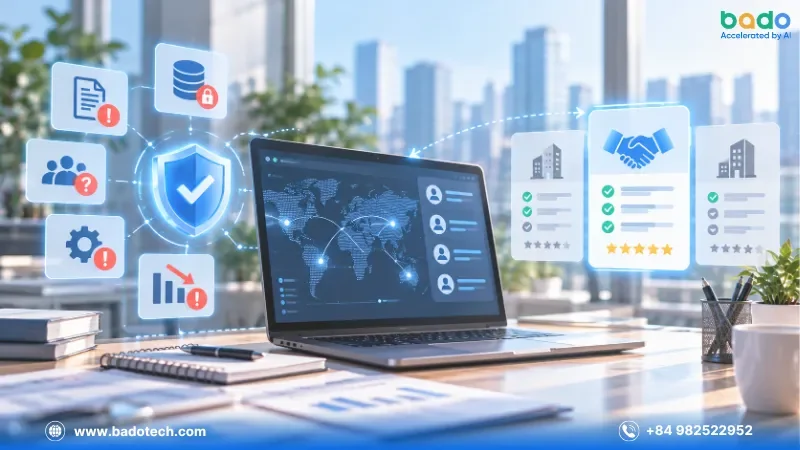
Outsourcing can give SMEs greater technical flexibility, but it also introduces dependencies that need to be managed. The objective is not to eliminate every possible risk. It is to identify the issues most likely to affect the project and establish reasonable safeguards before they become expensive problems.
Understand the Main Software Outsourcing Risks
The most common software outsourcing risks relate to unclear requirements, inconsistent delivery quality, communication gaps, security exposure, and dependence on an external provider. Their impact varies according to the nature of the software, the sensitivity of the data, and the client's ability to oversee development.
Scope ambiguity is particularly problematic. If the contract does not distinguish between agreed deliverables and additional requests, the parties may develop different expectations about cost and completion. A written scope, documented change process, and clear acceptance criteria can reduce this uncertainty.
Technical and operational risks require separate attention. Poorly tested code can create reliability problems, while inadequate documentation may make future maintenance difficult. SMEs should agree on code review, automated or manual testing as appropriate, deployment procedures, and access to technical documentation.
Security should also be considered from the beginning. Businesses handling customer information, financial records, or other sensitive data should define access permissions, confidentiality obligations, data handling requirements, and relevant compliance responsibilities. Contractual protections are useful, but they should be supported by practical security controls.
Finally, vendor dependency can become a problem when only the provider understands the codebase or controls essential project assets. Keeping documentation current, retaining appropriate ownership rights, and establishing a handover procedure can help the business preserve its options.
Decide When to Hire Developers, Build a Dedicated Team, or Use IT Staff Augmentation
The right engagement model should reflect how much control the SME wants to retain and how much technical leadership it can provide. A model that works well for a company with an experienced CTO may be less suitable for a business without an internal engineering lead.
If the requirement is a defined product or feature, project-based delivery may offer a straightforward starting point. The provider works toward agreed deliverables, while the SME concentrates on requirements, feedback, and acceptance.
When the business needs to hire developers for an existing engineering organization, IT staff augmentation can fill specific capability gaps. The external developers join the client's working process, and the internal technical lead remains responsible for assigning tasks and reviewing their work. This arrangement offers direct control but requires sufficient management capacity.
A dedicated team is often more suitable when the product roadmap is ongoing and requires several complementary skills. The provider supplies a stable team, while the client defines business priorities and collaborates on planning. Depending on the agreement, the provider may also handle day-to-day team coordination.
SMEs do not have to choose one model permanently. A business can start with a defined project, use IT staff augmentation to support an internal team during a busy period, and establish a dedicated team when product development becomes a long-term priority.
The decision should follow the business's delivery needs and management capacity rather than a preference for one outsourcing model.
How Bado Tech Supports SMEs With Software Outsourcing
Bado Tech provides software development outsourcing services for businesses that need external engineering capabilities to develop, improve, or scale digital products. For SMEs, the engagement should begin with a clear understanding of the product, the existing technical environment, and the business outcomes that matter most.
Rather than assuming every client needs the same team structure, the initial discussion can focus on the project's scope, required expertise, delivery expectations, and available resources. These factors help determine whether a defined project, a dedicated team, or additional development capacity is the most appropriate starting point.
Bado Tech's engineering capabilities include backend development with .NET and PostgreSQL, frontend development with React.js, and mobile development with Flutter, alongside other technologies suited to different product requirements. The specific technology stack and team composition should be selected according to the project rather than applied as a one-size-fits-all solution.
>> View more: Hire React Developers: Find the Right Talent for Your Product
For an SME, the practical value of an outsourcing partnership lies in turning business priorities into a manageable development plan. This includes establishing a realistic scope, agreeing on delivery responsibilities, maintaining visibility into progress, and planning for future product changes.
If your business is evaluating an MVP, modernizing an existing application, or looking for a reliable way to expand its engineering capacity, Bado Tech can discuss the requirements and possible engagement options with you.
Ready to explore software outsourcing for your business? Contact Bado Tech to discuss your project goals, technical requirements, and the development approach that best fits your needs.
Conclusion
Software outsourcing for SMEs is most effective when it is treated as a business decision rather than simply a way to obtain developers. The right partner and engagement model can help a company access specialized skills, manage technical investment, and develop software in line with its growth priorities.
Before committing to a provider, define the problem, establish a realistic budget, assess the risks, and decide how much technical management your internal team can support. With these foundations in place, outsourcing becomes a more structured way to build and maintain software while keeping business objectives at the center of every development decision.
Frequently Asked Questions
1. Is software outsourcing suitable for small businesses with limited budgets?
Yes. Outsourcing can help small businesses access technical expertise without establishing a full in-house engineering team. However, suitability depends on the project's scope, available budget, and the business's ability to define requirements and review progress. Starting with a focused release can help control the initial commitment.
2. How can SMEs reduce software outsourcing risks?
Businesses can reduce exposure by documenting requirements, checking the provider's experience, agreeing on milestones and acceptance criteria, and establishing clear security and intellectual property terms. Regular reviews, access to source code, and a documented handover process also help preserve control over the product.
3. How should an SME choose a software outsourcing partner?
An SME should evaluate technical experience, communication practices, delivery processes, security controls, contract terms, and the provider's ability to understand its business objectives. Comparing proposals against consistent criteria is more useful than selecting a partner based on the lowest quoted price alone.